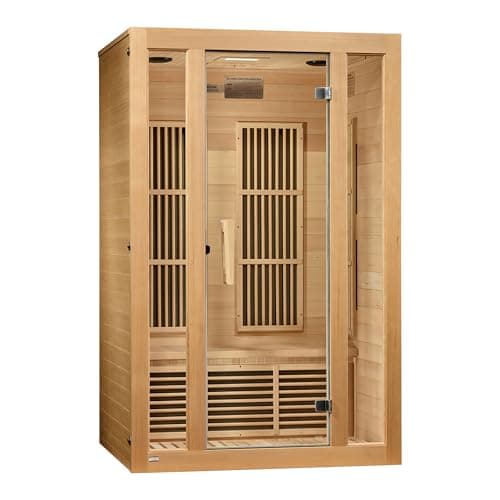
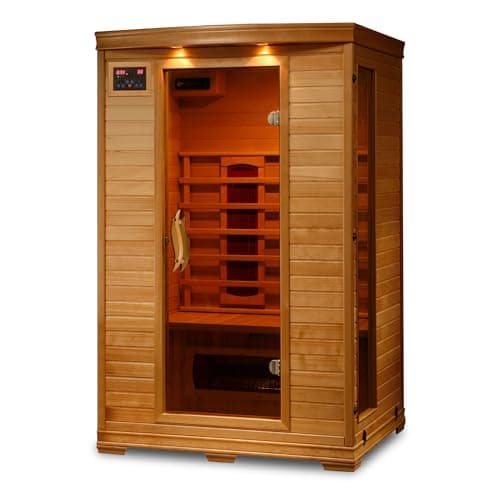
Buy the HeatWave Coronado if you want the value pick — a heater-dense 2-person cabin that warms fast and evenly for less. Buy the Maxxus Seattle if you want the slightly more finished, low-EMF-marketed cabin from the biggest mid-market family and the price gap is small. Both are far-infrared hemlock cabins that plug into a standard 120V outlet, so this isn't a wiring decision or a heat-type decision — it's heater layout, EMF marketing, fit-and-finish and price. Here's how to tell which one is the smarter buy for your room.
The difference in one table
| Factor | HeatWave Coronado | Maxxus Seattle |
|---|
| Honest capacity | 2-person | 2-person |
| Heat type | Far infrared | Far infrared |
| Heaters | Five to six carbon emitters | Carbon far-infrared panels |
| Wood | Hemlock | Canadian hemlock |
| EMF (rated) | Low EMF | Low EMF — marketed harder |
| Extras | Heater-dense layout | Chromotherapy lighting, Bluetooth |
| Power | 120V outlet | 120V outlet |
| Styling | Proven, dated cabin look | Slightly more finished |
| Best for | The value pick that heats well | A little more trim, for a little more |
Heaters and warm-up: the HeatWave's case
The Coronado's calling card is its heater count. It runs five to six carbon emitters — more than the typical 2-person layout — which means the heat wraps around you from the sides rather than radiating mostly from behind, and the cabin reaches a comfortable working warmth without dawdling. For a plug-in far-infrared cabin, a denser heater array is one of the few things that genuinely changes the feel of a session, and it's the main reason the Coronado is the value pick here: you get the more thorough wrap at the lower price. It comes from the long-running Radiant Saunas line, so it's a proven, widely available cabin rather than a new arrival — the trade being a dated look. The Maxxus Seattle warms perfectly well too, but its edge isn't heater density.
EMF marketing and finish: the Maxxus's case
The Seattle's pitch is fit-and-finish and its low-EMF marketing. It shares the same Golden-Designs-family engineering and support as the popular Dynamic line, and it presents as a slightly more finished cabin, with chromotherapy lighting and Bluetooth standard on most listings. Both cabins carry manufacturer low-EMF ratings, but the Maxxus leans on that claim harder in its marketing — worth knowing if a low-EMF label is high on your list, though it's a spec to compare rather than a health verdict, and these are judgments from published specs, listing data and aggregated owner feedback — not lab measurements; we don't have a lab. If EMF ratings are what's driving your shortlist, compare the whole field first in our best low-EMF infrared saunas guide rather than choosing on one brand's marketing.
Price: the factor that usually decides it
These two are close enough that price does a lot of the deciding. The Coronado is typically the cheaper cabin and gives you the heater-dense layout for the money, which is why it lands the value award; the Seattle usually sits a little higher and asks you to pay for the extra trim, the chromotherapy and Bluetooth, and the big-family support network. Neither is a bad cabin — they're cross-shopped constantly precisely because they're so evenly matched — so the honest advice is to check the current live prices on this site and let the gap decide. If it's wide, the HeatWave's value case is hard to argue with. If it's narrow, the Maxxus's finish and support tip the balance. Both live in our best infrared saunas under 2000 shortlist, which is the right frame for cabins in this price band.
What they share — and why you can't really go wrong
The overlap is large. Both are true 2-person cabins, both are hemlock, both are far-infrared only — neither is full-spectrum — and both plug into a standard 120V outlet with no electrician and no dedicated circuit. Both run the gentle far-infrared session that makes this style of sauna easy to sit through, and both draw a similar amount of power, so running cost is close. Where they part is narrow: the Coronado leans on heaters and value, the Seattle on finish and EMF marketing. For the broader picture of where each sits against the full field, our best infrared saunas ranking is the place to start, and it explains why brand support and heater layout carry the weight they do.
Which should you buy?
Buy the HeatWave Coronado if…
…you want the value pick and you care about how evenly it heats. The denser five-to-six-heater layout wraps warmth around you and warms up briskly, and it comes from a proven, widely available line — all at the lower price. Accept the dated cabin look and it's the smarter money for most buyers cross-shopping this pair.
Buy the Maxxus Seattle if…
…the price gap is small and you want the slightly more finished cabin with chromotherapy lighting, Bluetooth and the big-family support network behind it. Its low-EMF marketing is the loudest of the two, so if that label leads your list and you're happy to pay a little more for trim, the Seattle is the pick.
The tie-breaker: how big is the price gap?
Because these cabins are so evenly matched, the live price gap is the cleanest tie-breaker. Wide gap, and the HeatWave's value and heaters win easily. Narrow gap, and the Maxxus's finish, extras and support earn the small premium. Decide what you actually value — a more even heat and the lower price, or a more finished cabin and a louder low-EMF label — then let the current numbers confirm it. Either way you're getting an honest 2-person plug-in hemlock cabin.