HUB / GUIDES · Sauna Guides
How to Use a Sauna: A Beginner's Guide
Hydrate, rinse off, warm up, sit for a comfortable stretch, cool down, repeat. Here's the whole routine — plus how long and how hot to go by sauna type, and when to get out.
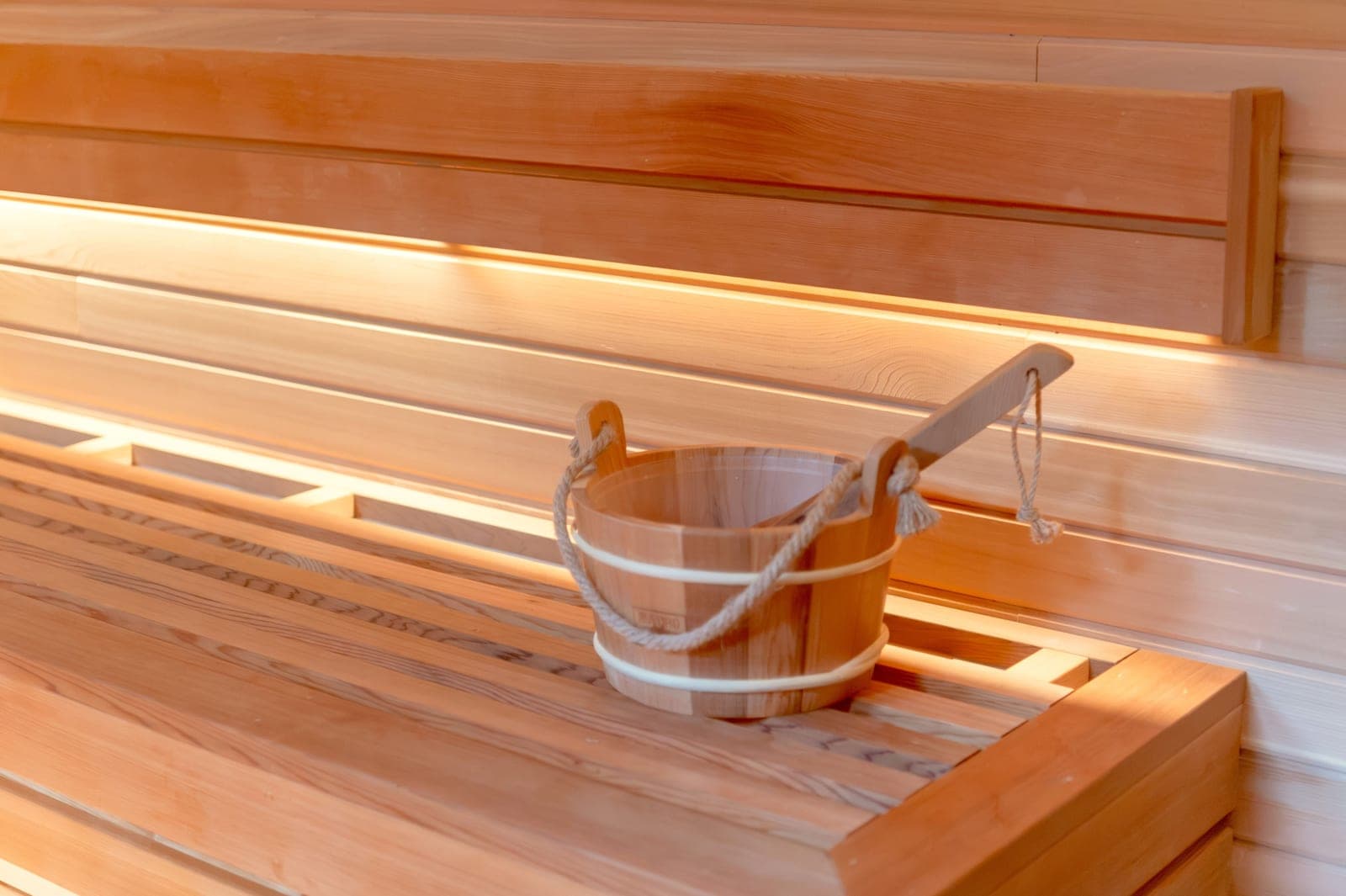
Using a sauna is simpler than it looks. Hydrate and rinse off first, warm up gradually, sit for a comfortable stretch, then cool down — and repeat that for a round or two if you're enjoying it. If you're new, keep your first sessions to 5-10 minutes and build up over a few weeks. The one rule that beats every guideline below is to listen to your body rather than chase a number on the timer.
Before you get in
A good session starts before you open the door. A few minutes of preparation makes the heat more comfortable and a lot safer:
- Hydrate. Drink a glass or two of water in the half hour before you go in. You will sweat a surprising amount, and starting even slightly dehydrated is the fastest way to feel lightheaded partway through.
- Skip the alcohol.Do not drink before or during a sauna. Alcohol and deep heat both drop your blood pressure and load your heart, and combining them is genuinely dangerous — this is the single most important "don't" on the list.
- Take a quick shower. A short rinse-off is standard etiquette in shared saunas, and even at home it helps: clean skin free of lotions and oils sweats more freely.
- Remove metal jewelry. Rings, watches, necklaces and piercings absorb heat and can get hot enough to be uncomfortable against your skin. Take them off and leave them outside.
What to wear and bring
Keep it minimal. Bring a towel to sit on — it is the one item you really should not skip, because it keeps the bench hygienic and protects you from a hot wooden slat. Wear a swimsuit or wrap yourself in a second towel, whichever the setting calls for. In a hot traditional sauna, many regulars wear a wool sauna hat: it sounds odd, but your head heats up faster than the rest of you, and a wool hat insulates it so you can stay in comfortably a little longer. A water bottle nearby is smart, and a simple timer or a glance at a clock keeps you honest about the length. A good thermometer, timer and bucket-and-ladle set makes all of this easier and turns a bare box into a proper sauna.
How long to stay in, by type
There is no universal number, because sauna types run at very different temperatures. Here is the sensible starting range for each:
| Sauna type | Typical temperature | Session length |
|---|---|---|
| Traditional (Finnish, electric or wood) | 150-195F | About 15-20 minutes per round |
| Infrared cabin | 120-140F | Longer, about 30-45 minutes, because it runs cooler |
| Beginner (either type) | Low end of the range | Start at 5-10 minutes and build up over weeks |
The reason infrared sessions run longer is the temperature. A traditional sauna heats the air to a genuinely hot 150-195F, so 15-20 minutes is plenty; an infrared cabinwarms your body directly while the air stays a gentler 120-140F, which most people can tolerate comfortably for 30-45 minutes. Either way, if you're just starting out, ignore the top of the range and give yourself a short, easy first session. Heat tolerance is real and it builds — there is no prize for toughing out 20 minutes on day one. The full logic of why the two types run at such different temperatures is in the sauna temperature guide.
The session, step by step
Most experienced users don't do one long, continuous sit. They do rounds: a stretch in the heat, a cool-down, and back in again. A typical routine looks like this.
- Warm up. Get in, find a comfortable bench — the lower bench is cooler if the top feels too intense — and let your body settle into the heat for the first few minutes. Breathe slowly and relax rather than clock-watching.
- Round one.Sit for your comfortable window: 15-20 minutes traditional, up to 30-45 infrared, or 5-10 if you're new. You should feel warm, loose and sweating freely, never distressed.
- Cool down. Step out, sit in cooler air, and take a cool shower or splash of water. This break is not optional filler — it is part of the ritual and lets your heart rate come back down before you go again.
- Optional further rounds.If you're enjoying it and still feel good, go back in for a second or even third round, cooling down between each. Two to three rounds is a classic full session. Stop the moment a round stops feeling good.
Loyly: throwing water for steam (traditional only)
In a traditional sauna with a rock-topped heater, you can ladle a little water over the hot stones. This is loyly — the burst of steam that briefly spikes the humidity and makes the heat feel alive and enveloping. Add water a small ladle at a time; a single scoop makes a noticeable difference, and it is easy to overdo. Loyly is the heart of the Finnish sauna experience, but it only works where there are hot stones and water. An infrared cabin has no rocks and no water source, so there is no loyly there — infrared is dry radiant heat only. If steam is what "sauna" means to you, that points you toward a traditional unit.
Listen to your body — the warning signs
This is the part that matters most, and it overrides every timing suggestion above. The heat is doing real work on your circulation, and your body will tell you when it has had enough. Get out immediately, cool down and rehydrate if you feel any of these:
- Dizziness or lightheadedness
- Nausea
- A headache coming on
- A racing or pounding heart that doesn't feel right
- Any sense that you are overheating or simply "done"
None of these are things to push through. A sauna is not an endurance test, and the benefits people associate with regular use come from a comfortable, repeatable habit — not from setting personal records. If you ever feel faint, leave and lie down with your feet up until it passes.
After your session
Come down gradually. Step into cooler air, let your body temperature settle, and take a cool or lukewarm shower — many people love a cold rinse here, but ease into that rather than shocking yourself. Then rehydrate: drink water to replace what you sweated out, and give yourself a few minutes to cool fully before dressing or heading back out into the cold. Resist the urge to stand up fast; your blood pressure can be low right after the heat, and a slow rise avoids the head-rush. A short rest, a big glass of water, and you're done.
How a session should feel
A good sauna session feels warm, loose and pleasantly heavy — you should be sweating freely, your muscles relaxing, your breathing slow. It should never feel like suffering. If you find yourself gritting your teeth, watching the clock and willing the minutes to pass, the temperature is too high or the session too long for where you are today. Back off; there is genuinely nothing to win by enduring it. The best sign you're doing it right is that you finish looking forward to the next one rather than relieved it's over. That feeling is also the whole engine of the benefit, because it's what keeps you coming back.
Common beginner mistakes
Nearly every first-timer trips over the same handful of things. Sidestep these and your early sessions will go far better:
- Going too hot, too long, too soon. Start cool and short and build up over weeks — heat tolerance is real and it grows.
- Not drinking enough water. Under-hydrating is the fastest route to feeling lightheaded partway through; drink before and after.
- Having a drink first. Alcohol plus heat is the one combination to avoid completely, not just moderate.
- Standing up too quickly at the end. Your blood pressure can be low, so rise slowly to dodge the head-rush.
- Chasing a number.The timer is a guide, not a target — your body's signals always win.
- Forgetting the towel. Sit on one every time, for hygiene and to keep off a hot bench.
Building the habit
The single most useful thing to know about "how to use a sauna" is that consistency beats intensity. The health signal that researchers have linked to sauna use — better cardiovascular outcomes — tracks with frequent, regularsessions, not the occasional heroic one. So the best routine is the one you can actually keep: a comfortable temperature, a length you look forward to, a few times a week. If you want to understand what the evidence does and doesn't support, read the sauna benefits guide; if you have any health condition, start with the safety guide first.
Three follow-up questions are worth their own pages: the best time of day to use a sauna, sauna and tattoos if yours are recent, and the history of the sauna if you want to know where the etiquette you have just read actually comes from.
Questions
Frequently asked
How do you use a sauna as a beginner?
How long should you stay in a sauna?
Should you shower before or after a sauna?
What should you wear in a sauna?
What is loyly and can you do it in any sauna?
Keep reading
Related
More in Sauna Guides
Receipts
Sources
- Laukkanen T. et al., JAMA Internal Medicine 2015 — association between sauna bathing and fatal cardiovascular and all-cause mortality events
- Laukkanen J.A., Laukkanen T. & Kunutsor S.K., Mayo Clinic Proceedings 2018 — cardiovascular and other health benefits of sauna bathing (evidence review)
We do not run a testing lab, and we do not pretend to. Product specs are transcribed from the manufacturer's own listing and cited as claims; health figures come from peer-reviewed studies, named and linked. Where we could not verify something, we say so on the page rather than quietly leaving it out. Read our full method.