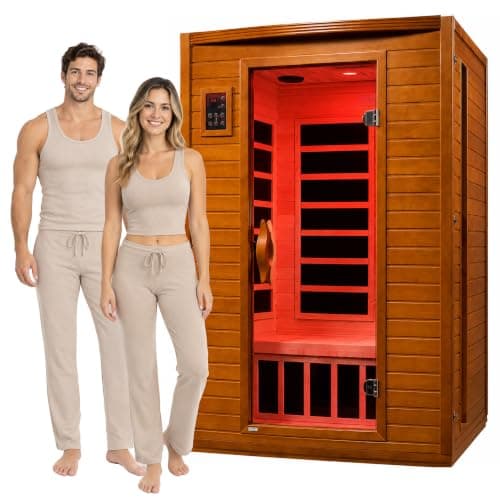
Buy the cabin if you want a real, sit-up sauna room and have the floor space; buy the blanket if space, budget, or a low-commitment first try matter more. The Dynamic Andora is the full-cabin pick — a 2-person far-infrared room that plugs into the wall — and the HigherDOSE blanket is the premium lie-inside option that folds into a closet.
The comparison in one table
| Factor | Infrared cabin (Dynamic Andora) | Sauna blanket (HigherDOSE) |
|---|
| Experience | Sit up in a wood room, move around | Lie still inside, head out |
| Footprint | Needs standing floor space | Almost none — folds away |
| Price band | Higher (a full cabin) | Premium for a blanket, far below a cabin |
| Capacity | 2-person | One person |
| EMF | Low EMF (rated) | Low EMF (rated) |
| Wiring | Standard 120V outlet | Standard 120V outlet |
| Best for | A real sauna room at home | Tight space, tight budget, first try |
What each one actually is
A cabin and a blanket both use low-EMF far-infrared heat and both plug into a standard outlet, but the experience could hardly be more different. The Andora is a wood room you sit up in: you can shift on the bench, bring a second person, read, and feel like you're in a sauna rather than a heating device. The HigherDOSE is a padded, zip-up blanket you lie inside with your head poking out the top, heating your body up to around 158F while you stay put. One is a place; the other is a wrap. Which you want depends far less on the heat — both deliver a proper far-infrared sweat — and far more on your room and your budget.
Space and budget do most of the deciding
The cabin needs dedicated floor space — a couple of feet of standing room plus door-swing and airflow clearance — and it costs like a piece of furniture, because it is one. The blanket has essentially no standing footprint: it rolls out on a bed or the floor for a session and folds into a closet afterwards, and it costs a fraction of a cabin even at the premium HigherDOSE end. If you rent, live in a studio, or aren't sure you'll stick with the habit, the blanket removes almost every barrier to entry. If you have the room and want the real thing, the cabin is worth the space and the money. The full running cost of each is small either way — our home-sauna cost guide works through the upfront and per-session math.
Where the blanket feels its limits
Be honest with yourself about the confinement. You lie still inside a blanket for the whole session — some people find that relaxing, others find it more claustrophobic than a cabin where you can sit up and move. It's strictly one person, there's no bringing a partner, and the ritual of walking into a warm wood room simply isn't there. None of that makes the blanket a bad buy; it makes it a different buy, best matched to the person who values footprint and price over the sit-in experience. If you know you want the wrap format, our best sauna blankets guide ranks the options.
Cleaning and upkeep, compared
The two formats ask for different chores. A cabin is low-maintenance in the boring, reliable way: wipe the benches down after a session, air it out, and it's ready — the wood and the panels aren't in contact with much sweat directly. A blanket wraps closely around you, so you either use a towel or liner inside it or wipe the interior down after every session, and you let it dry before folding it away. Neither is onerous, but the blanket's upkeep is more frequent and more hands-on, which is worth knowing if you'll use it daily. If low-fuss aftercare is part of what you want from the habit, that quietly favors the cabin.
Ritual, time and how often you'll actually use each
Be honest about the ritual, because it drives how often you'll really use the thing. A cabin is a destination: you walk in, warm up over 10-15 minutes, sit, and it feels like an event — which is lovely, but it's also a bit more commitment to fire up. A blanket is lower-friction to start (roll it out, switch it on) but higher-friction to be in, because you lie still for the session. Some people sauna more often with a cabin because they enjoy the room; others use a blanket more because it's right there by the bed. Match the format to the version of you that will actually press start on a tired evening.
Sharing, and the one-person ceiling of a blanket
A blanket is strictly a solo device — there is no version where two people share one, and no upgrade path from a blanket to a two-person session. The Andora seats two, so it doubles as something a couple can do together or a single person can grow into. If a sauna is a shared ritual for your household, that alone can settle the decision toward the cabin; if it's a private, one-person reset, the blanket's solo nature is a non-issue and its footprint advantage stands.
Heat, temperature and how the sweat feels
Both deliver a genuine far-infrared sweat, but the sensation differs. The blanket is in direct contact with your body and heats up to around 158F against the skin, which many find produces a fast, intense sweat lying down. The cabin heats the air and radiates from panels around you to a comfortable 120-140F, which feels more like a room you're sitting in than a wrap you're inside. Neither is objectively hotter or better — it's the difference between being enveloped and being surrounded. If you like the enveloping, close heat, the blanket delivers it; if you prefer the airy sit-in warmth of a sauna room, that's the cabin.
Storage, portability and the shared-home question
Where you keep it between sessions is a real difference, not a footnote. The blanket rolls or folds into a closet, a drawer or under a bed, and it travels — you can take it to a partner's place or pack it when you move. The cabin stays put; once it's built, moving it means partly dismantling it. In a shared home that cuts both ways: the blanket disappears when you're done, leaving the room to everyone else, while the cabin claims its corner permanently but is always ready without setup. If your space does double duty or your living situation might change, the blanket's pack-away nature is a genuine advantage; if you have a spot you can dedicate for the long term, the cabin's always-there permanence is the upside of the same coin.
Where the cabin wins
The cabin gives you the thing a blanket can't: a room. You sit upright, you can share it, you can move, and it looks and feels like a sauna. The Andora specifically brings the largest support network in the category and built-in red-light LEDs on top of its low-EMF far-infrared panels. The cost is real floor space and a higher price — but if you have both and want the genuine article, nothing about a blanket replaces it. For the wider cabin field, see our best infrared saunas ranking.
Which should you buy?
Buy the blanket if…
…you're tight on space, tight on budget, or trying infrared for the first time and don't want to commit a room to it. A blanket like the HigherDOSE folds away to nothing, costs far less than a cabin, and delivers a real far-infrared sweat for one person lying down. It's the lowest-barrier way into the habit.
Buy the cabin if…
…you have the floor space and want the real sit-in sauna room — the ability to sit up, move, and bring a second person. The Dynamic Andora is the full-cabin pick: a 2-person far-infrared room on a standard outlet, with the widest support network behind it. It costs more and needs the space, and for the genuine article that's a fair trade.
The blanket makes a great try-before-you-commit
If you're not yet sure infrared is for you, the blanket is the low-risk way to find out. It costs a fraction of a cabin, needs no floor space, and folds away if you decide it's not your thing — so the downside of being wrong is small. Plenty of people start with a blanket, confirm they love the habit, and only then commit a room and the money to a cabin. Treating the blanket as a gateway rather than a lesser cabin is a perfectly sensible way to buy.
If you have the room, don't under-buy
The flip side: if you already know you want a sauna and you have the floor space, buying a blanket to save money can be a false economy. You'll get the sweat but not the room, the sit-up comfort or the ability to share — and some buyers end up wanting the cabin anyway. When space and budget genuinely allow, the Andora is the more complete purchase, and buying it first saves you from paying twice. Be honest about which situation you're in.
Factor in who else is in the house
If you share your home, think past your own preference. A blanket is invisible when stored and never ties up a room, which housemates and partners tend to appreciate; a cabin claims floor space permanently, so it's worth a conversation before it arrives. Conversely, if the whole household wants in, only the cabin seats two — the blanket will always be a one-at-a-time device. Whose habit this is, and how many of them there are, should feed into the choice as much as your own comfort does.
What they share — so don't decide on it
Both are low-EMF far-infrared, both plug into a standard 120V outlet, and both deliver a proper far-infrared sweat, so don't choose on heat type or wiring. The decision is entirely about experience, footprint and price: the sit-in room versus the fold-away wrap. Match those to your space and budget and the answer is usually obvious.