HUB / BARREL · Barrel Saunas
Barrel Sauna vs Cabin Sauna
A round barrel and a square cabin heat, sit and age differently — and the shape is the real difference. Here's how the round profile and the flat-walled box each win, so you pick the one that fits your yard and your ritual.
We earn a commission when you buy through our Amazon links, at no extra cost to you. It never affects our rankings, and we say so when the cheaper product is the better buy. How this works.
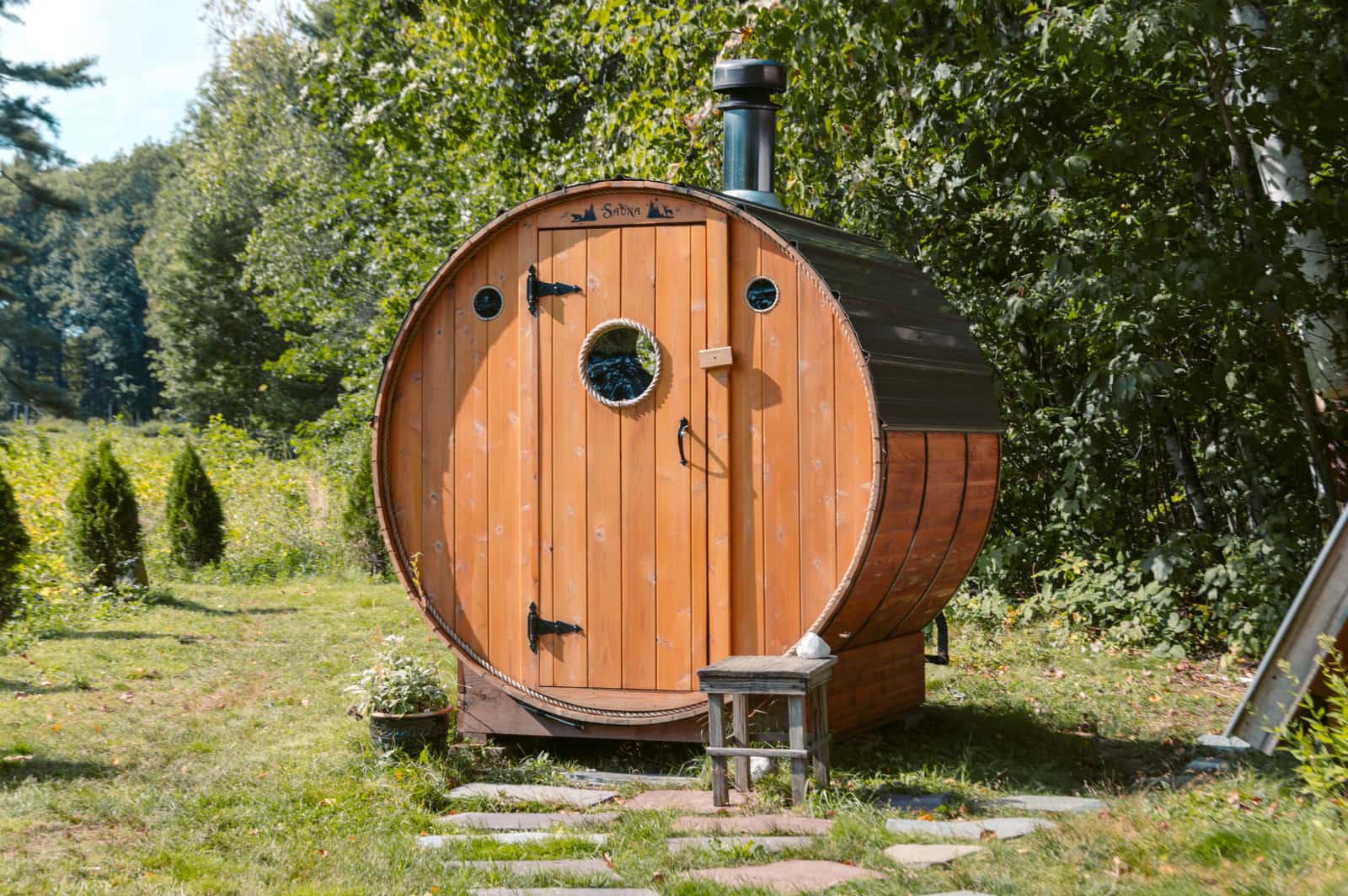
A barrel and a cabin can seat the same people and hit the same heat — the difference is the shape, and the shape quietly decides how fast it warms, where it fits, and how it ages outdoors. Neither wins outright. The round barrel is the efficient, weather-shedding statement piece; the square cabin is the space-smart, understated box that uses a corner better. Here's how the geometry plays out across the things you'll actually notice.
The shape is the whole argument
Everything below traces back to one fact: a barrel is a cylinder lying on its side, and a cabin is a box. The cylinder encloses less air for the same bench space and has no corners; the box maximizes flat wall and floor but stacks air up under a flat ceiling. That single geometric difference is why the two feel different to heat, to place and to maintain — so rather than a spec war, the honest comparison is about which set of shape-driven tradeoffs suits you.
Heat circulation and heat-up time
This is the barrel's headline advantage. Because the round profile encloses less air than a square cabin of the same seating, there's simply less volume to bring to temperature, so a barrel tends to heat faster and on less energy. The curved ceiling also rolls warm air back down onto the bench instead of letting it stack dead against a flat roof, which keeps the heat where your body is. A square cabin has to warm more air and has upper corners where heat pools away from you, so a correctly sized stove matters even more — an undersized heater shows up first in the corners of a box. It's not that a cabin can't get hot; a real rock stove throws proper loyly in either shape (Finnish Sauna Society). It's that the barrel gets there with a little less air to fight and fewer dead spots.
Footprint and where it fits
Here the cabin quietly wins. A barrel is round, so it needs clearance all the way around and never tucks neatly against a wall or into a corner — its footprint is generous relative to the bench inside. A square cabin, by contrast, sits flat against a fence, a house wall or a corner and uses a rectangular yard or a rectangular room far more efficiently. That's also why cabins dominate indoors: a box fits a basement or spare room in a way a barrel rarely does. If your space is tight or shaped by walls, the cabin's straight sides are a real practical edge — see our best indoor saunas for the cabin side of the catalog.
Snow, rain and living outdoors
Barrels are built to weather. Staves banded like a wine barrel shed rain down the curve, and the rounded top sheds snow rather than letting it sit and load — part of why the barrel is the default outdoorshape. A square cabin can absolutely live outside too, but its roof is the variable: a flat or low-pitch roof can hold snow and pond water unless it's well pitched and flashed, and a box has more seams and joints for weather to find. A well-built cabin from a real manufacturer manages all of this (Almost Heaven builds both shapes), but the barrel's geometry does some of the weatherproofing for free. Whichever you choose, it has to sit on a proper level base — which we cover in what a barrel sauna sits on.
Aesthetics and the yard
This one's taste, but it's a real reason people choose. A barrel is a statement — a rounded wooden tube is a backyard centerpiece, and buyers who want the sauna to look like a destination tend to love it. A cabin is the understated option: it reads like a tidy outbuilding or a shed and blends into a yard or a garden room rather than announcing itself. If you want the sauna to be the focal point, lean barrel; if you want it to disappear into the property, lean cabin.
Assembly and setup
Both arrive as kits, and both are a two-person job, but the shapes go together differently. A barrel is relatively few big parts — staves drawn together with steel bands, dropped onto cradles — and many owners find it goes up surprisingly fast for its size. A cabin is panelized walls plus a roof, which is a more familiar, more rectangular build but usually more individual pieces to align and seal. Neither is trivial, and both share the same non-negotiable first step: a firm, dead-level base, because a barrel that isn't level binds its door and stresses its staves, and a cabin that isn't level racks its panels.
Cost patterns
Prices move for the same reasons in both shapes — wood, heater and size — but the patterns differ a little. Barrel kits often have a lower entry point for a given seating count, partly because the shape uses less material and less air, and the outdoor barrel market is full of value hemlock kits. Cabins span a wider range: compact indoor traditional cabins can be very reasonable, while large or premium-wood outdoor cabins climb well past a comparable barrel. In both, a US-cedar build from a real manufacturer sits at the top, a brand-name heater is worth more than a generic one, and the 240V electrical install is the same four-figure-adjacent surprise regardless of shape. Compare live prices across both on the best barrel saunas and indoor cabin roundups rather than trusting a shape to be cheaper on principle.
Which should you pick?
Choose the barrelif it's going outdoors, you want the fastest warm-up and lowest running energy for the seats, you like the statement look, and you have the open clearance around it. Choose the cabinif space is tight or shaped by walls, if it's going indoors, or if you'd rather the sauna blend in than stand out. If you're also still deciding between heat types rather than shapes, our infrared vs barrel sauna guide settles that fork — a plug-in infrared cabin and a traditional barrel are very different buys before the shape question even comes up.
Questions
Frequently asked
Is a barrel sauna better than a square cabin sauna?
Does a barrel sauna heat up faster than a cabin?
Can a barrel sauna go indoors like a cabin?
Is a barrel or cabin sauna cheaper?
Keep reading
Related
More in Barrel Saunas
Receipts
Sources
- Almost Heaven Saunas — US-built barrel and cabin saunas (manufacturer)
- Finnish Sauna Society (Suomen Saunaseura) — traditional sauna bathing and loyly
We do not run a testing lab, and we do not pretend to. Product specs are transcribed from the manufacturer's own listing and cited as claims; health figures come from peer-reviewed studies, named and linked. Where we could not verify something, we say so on the page rather than quietly leaving it out. Read our full method.