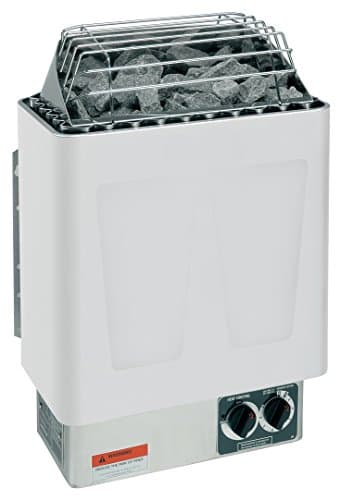
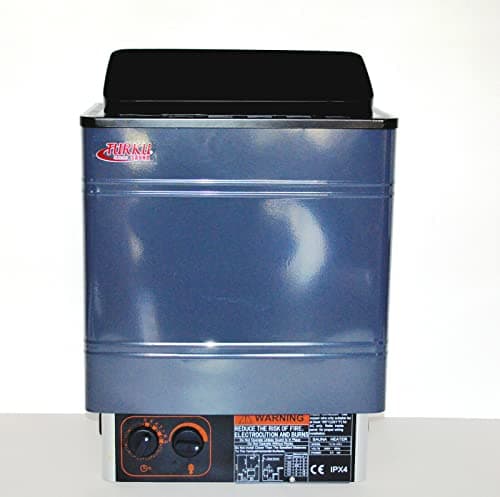
For most buyers the best value wet/dry sauna heater is the Turku 9kW — explicitly rated wet/dry, sized for a large room, and a real step up in value over the premium brands at that power. "Wet/dry" is the spec that matters if you want real löyly — the burst of steam from throwing water on the rocks. Not every electric heater is rated to be doused; a wet/dry (or löyly-ready rock) stove is built to take water safely, session after session. This page ranks the wet/dry heaters worth buying, across room sizes, and is honest about the trade-offs. Every pick is live-priced, so the buy CTA reflects a real number — and you still need to size the heater to your room, which we cover below.
How we ranked them
These are judgments from published specs, listing data and aggregated owner feedback — not lab measurements; we don't have a lab. For a wet/dry heater the criteria run:
- Löyly rating first.The heater has to be built to take water on the rocks safely and repeatedly — that's the whole point of "wet/dry."
- Right-sizing. Roughly 1kW per 45 cubic feet of well-insulated sauna. The best heater is the one matched to your room — too big overshoots and wastes energy, too small never reaches temperature.
- Build and stones. Element quality, whether stones are included, and how the rock basket holds heat and water.
- Controls and install. Built-in knobs versus an external controller, and how demanding the 240V hookup is.
- Value. What you pay for the wattage and the löyly rating, and the depth of parts support behind the brand.
Get the size right before anything else — the sauna heater size guide does the arithmetic for your room, and every one of these is a 240V appliance that needs a licensed electrician, as do you need an electrician for a sauna heater explains.
The picks, by room size
Because sizing decides so much, treat this ranking as best-value-first rather than biggest-is-best. The Turku 9kW leads for a large room on value; the Harvia KIP 4.5kW is the premium build for a small-to-mid room; the Turku 4.5kW is the value option for a small room. Each lists what it's best for and who should skip it.
Wet/dry vs dry-only, and what löyly needs
A quick honest clarification, because the marketing muddies it. A traditional electric rockstove — like all three here — heats a basket of stones, and a wet/dry-rated one is designed so you can ladle water over those hot stones for löyly without damaging the element. That steam burst is the soul of a Finnish sauna and the thing an infrared cabin can't do at all (there are no rocks). Use the right water — a small ladleful at a time, not a bucket — and proper sauna stones that store and release heat, covered in the sauna heater rock guide. Harvia, the benchmark brand, builds its residential stoves for exactly this, as its own heater range shows. Whichever you buy, throwing water is a feature you have to buy the hardware for — not something to improvise on a dry-only heater.
What actually decides the buy
Sizing and support do most of the work. Match the wattage to your room first — an oversized 9kW in a 2-person cabin is as wrong as an undersized 4.5kW in a large one. Then weigh brand depth: Harvia's parts-and-stone network is the deepest for the long haul, while Turku undercuts it on price for the same wet/dry job. All three are 240V hardwired stoves, so budget for the electrician and, in most places, a permit and inspection — that cost is part of the real price of a traditional sauna. For the wider field including budget and premium options, see the best sauna heaters hub.
Buyer's guide: buying a wet/dry heater right
Size it to the room, not your ambition
The most common heater mistake is buying too much kW. The rule of thumb is about 1kW per 45 cubic feet of well-insulated sauna, nudged up for glass doors and cold exterior walls. A 9kW stove will cook a small 2-person cabin and waste energy doing it; a 4.5kW won't reach temperature in a big room. Measure your space and run the numbers in the sizing guide before you pick from this list.
Budget for the install, not just the box
Every heater here is 240V and hardwired. That means a licensed electrician — and in most jurisdictions a permit and inspection — under the National Electrical Code. It's not a plug-in job, and it's not a place to cut corners near a wet, hot room. Factor that into the total before you compare sticker prices.
Don't skimp on stones
The rocks are what make löyly work. Some budget stoves ship without them, so check, and use proper dense sauna stones (olivine/peridotite) rather than landscaping gravel, which can crack or explode. Arrange them loosely for airflow, and replace them when they crumble. The rock guide covers the details.