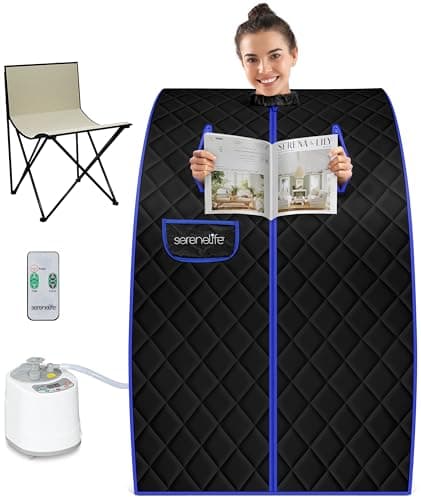
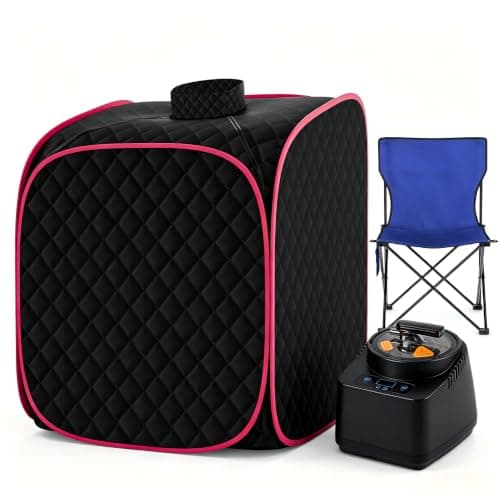
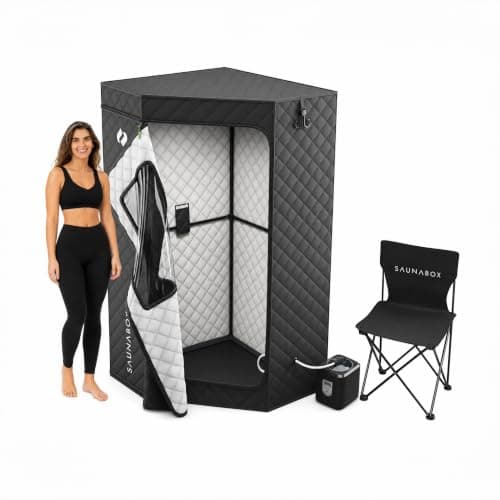
Under $500 the best portable sauna is the SAUNABOX SmartSteam Kit Pro, and the reason is height: at 6ft 2in you sit upright with your head inside the humid air instead of poking out of a zip collar, which is the single thing that separates a sauna from a sweat bag. At current prices it also leaves roughly half the budget unspent. If you want dry heat rather than steam, the SereneLife infrared tent is the pick. If you have no floor space at all, buy a blanket instead of a tent — the LifePro RejuvaWrap is the value one. And if you genuinely do not know whether you will use this twice, spend under a sixth of the ceiling on the FniOk and find out.
Under $500 you are choosing a format, not a brand
This is the thing almost every roundup in this category gets wrong by splitting itself along product-type lines. At this budget three genuinely different machines compete for the same money, they deliver three different experiences, and the brand you pick matters far less than which of the three you pick. So this page ranks all three together.
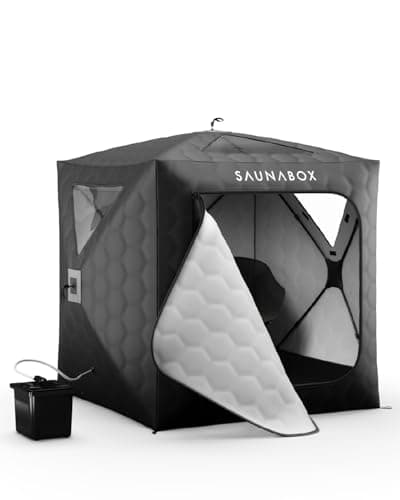
- A steam tent. A fabric enclosure and a small boiler that pumps wet steam into it. Humid heat at a moderate temperature — typically rated around 130-140F — which many people find easier to tolerate and easier to breathe than dry heat. Needs a square meter of floor and drying out after every session. Cheapest format and the most sauna-like at this price, if you buy a tall one.
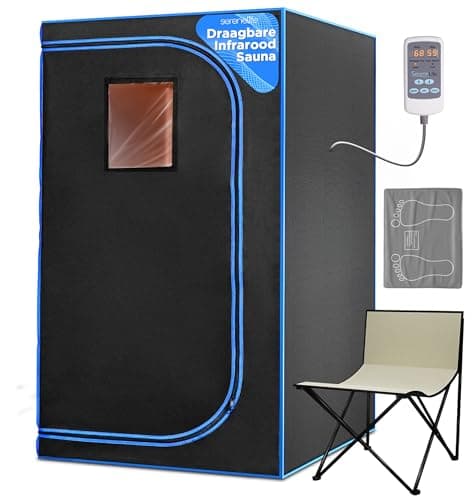
- An infrared tent. The same zip-up idea with radiant panels instead of a boiler. Dry sweating, faster to warm, nothing to refill and nothing to dry out. Almost all of them put your head outside the tent through a collar, which is a real experiential difference.
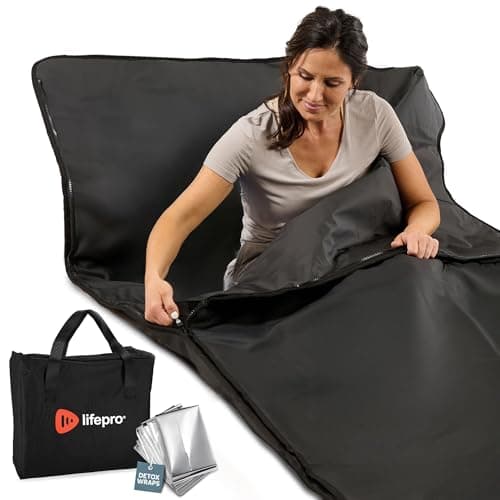
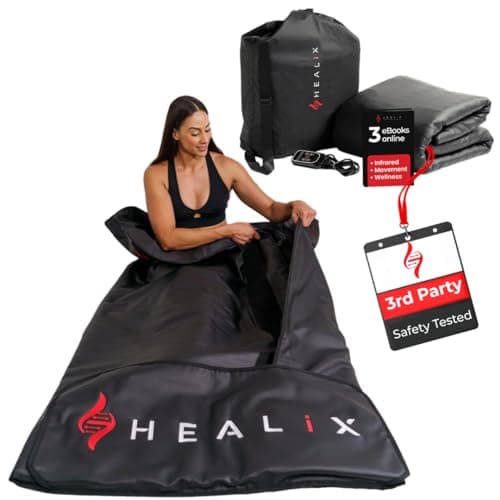
- A sauna blanket. A padded infrared sleeping bag you lie inside. Needs no floor space, stores under a bed, and is the only format that works in a small apartment with no spare corner. You cannot move, read or hold a drink, and your head is out by design.
None of the three is a Finnish sauna. The Finnish Sauna Society describes a traditional sauna as a room at roughly 150-195F with steam thrown onto hot stones, and nothing on this page reaches that or does that. What these do is make you sweat hard at home for under $500, which is a legitimate and much cheaper proposition — see are portable saunas worth it for the honest version of that argument.
How we ranked them
Criteria first, and the first criterion is the one that reorders this category completely. Everything below is a judgment from documented research — published listing and manufacturer specs plus aggregated owner reports. We have not put a thermometer inside any of these, and our methodology says so in those words.
- Is your head in the heat? This is the biggest experiential difference in the whole category and almost nobody ranks on it. A 6ft 2in tent you sit upright inside feels like a small steam room. A 40-inch box with your head out of a collar feels like a machine attached to you. Both make you sweat; only one is pleasant.
- What does the listing actually publish?Wattage, reservoir volume, erected dimensions, a temperature range, what the water touches. Products that publish all five score above products that publish a sweat emoji and a number of "heat levels".
- How much of the $500 does it leave unspent? A price ceiling is not a target. At this budget, the winner being well under the ceiling is a feature, because the leftover buys a decent towel, a thermometer or the first month of your electricity.
- What is the chore? Steam tents must be dried after every session or they mildew; blankets must be wiped down; infrared tents need neither. Every portable has an after-session job, and the honest question is which one you will keep doing in February.
- Does it fit your actual home? Erected footprint and stored footprint are different numbers and both matter. A tent that needs a 3x3 foot clear area and a corner to dry in is a different proposition from a blanket that rolls into a cupboard.
The three formats, side by side
| Format | Heat | Head in the heat? | Floor space | After-session chore |
|---|
| Tall steam tent | Wet, moderate (rated 130-140F) | Yes | About 3 x 3 ft erected | Dry it out fully |
| Head-out steam box | Wet, moderate | No | About 2.5 x 2.5 ft erected | Dry it out fully |
| Infrared tent | Dry, radiant | No | Chair-sized erected | Wipe down |
| Sauna blanket | Dry, radiant, full contact | No | None — needs a bed or floor to lie on | Wipe the liner |
Read that table before you read the picks. If the "head in the heat" row is what you care about, exactly one format qualifies and the decision is already made. If floor space is what you care about, the blanket wins and nothing else comes close. Everything after that is detail.
Which one is for you
- Most people — the overall pick: the SAUNABOX SmartSteam Kit Pro. Stand-up height, a 1,600 W steamer with a stainless chamber, and it ships genuinely complete down to the floor mat and the chair.
- You want dry heat and no refilling: the SereneLife SLISAU30BK infrared tent. The most-reviewed portable in the category, with a chair and foot heater, and nothing to dry out afterwards.
- You have no floor space — apartment pick: the LifePro RejuvaWrap. Nine temperature levels, a low-EMF rating, and it stores rolled up. See best portable saunas for apartments for the full apartment case.
- Two of you, going in together: the SAUNABOX SmartSteam 2-person. Genuinely 56 inches wide — and only 53 inches tall, which is the trade and we would not hide it.
- EMF is your first question: the Healix blanket, right at the top of the budget. Its zero-EMF carbon-fiber claim is the boldest in the category and it is a manufacturer claim, not a measurement — background on what the term means is at NIEHS.
- You want wet steam cheaply from a known name: the SereneLife steam tent, a head-out box with the generator included.
- You are testing whether you will use it at all — the budget pick: the FniOk steam tent. A tent, a 1,000 W steamer and a folding chair for a fraction of the ceiling. A tester, not a keeper, and the card says so.
- Your budget is actually higher: a real cabin starts not far above this page — best infrared saunas under $1,000 is where to look if the head-out compromise is the part you cannot accept.
Half this budget changes the field completely — at the lower ceiling every option is a steam tent, and best portable saunas under $200 ranks them on tank size and control.
What $500 buys, and the one thing it cannot
Being precise about the ceiling is more useful than cheerleading. Under $500 you can have a tall enclosure, a published wattage, a stainless steam chamber, a complete kit with a chair and a mat, app or remote control, and in the blanket formats a low-EMF rating. That is a lot.
What you cannot have is a room. Every product on this page is fabric and frame around one or two seated people, which means no benches to move between, no stones to throw water on, and nothing above about 140F. A traditional sauna is a 150-195F insulated room with a rock stove, and the cheapest honest route to that is a heater plus a built room, which is an order of magnitude more money and a wiring job — our home sauna cost guide lays out the tiers.
There is also a durability ceiling. Canvas, PU-coated fabric and steel or fiberglass poles are multi-season gear, not furniture. Treat anything in this bracket as something you will replace rather than keep, and weight the cheapest picks accordingly: a tent at a sixth of the ceiling that lasts two years is not necessarily worse value than one at half the ceiling that lasts five, but you should know that is the bet you are making.
Steam or infrared, decided properly
People agonize over this and then pick on price. There are really only four questions that matter, and they are all about your home and your habits rather than about heat physics.
Where will it live between sessions, and can it dry there? A steam tent that goes back in its bag damp will smell within a fortnight. If you have a bathroom, garage or spare corner where a tent can stand open for an hour, steam is on the table. If it has to go straight into a closet, buy infrared or a blanket. This question eliminates more buyers than any other, and almost no listing mentions it.
Does humid air suit you? Steam at a moderate temperature feels hotter than the thermometer says and some people find it easier to breathe than dry heat; others find it stifling. If you have a strong preference from gym steam rooms versus dry saunas, follow it — that preference is more reliable than any spec. Our sauna vs steam room guide covers the physiological difference.
How long is a session, really? Steam tents are limited by their reservoir: when the water is gone the steam stops. A 3.6 L chamber is a long session; a 2.6 L one is a shorter one, and a double session means a refill. An infrared tent and a blanket run as long as they are plugged in.
Do you want to do anything while you are in there? In a tall tent you can sit upright and hold a drink. In a blanket you are horizontal and immobile for the whole session — which some people like, because it enforces the rest, and others cannot stand. Sauna tent vs sauna blanket is the head-to-head if this is your deciding factor.
Running cost, and why it is not the reason to choose
Portables are small appliances. A 1,600 W steamer drawing full power for a 30-minute session uses about 0.8 kilowatt-hours; a blanket draws considerably less. Multiply by your own rate — the EIA publishes the US residential average, but your bill is the number that counts — and you get a cost per session measured in dimes, not dollars. For comparison, our home sauna running cost page does the same arithmetic for a 6kW cabin, which is roughly four times the draw for a longer heat-up.
So electricity is not a reason to choose between these. The costs that actually differ are the consumables and the chores: a steam tent needs water and a drying routine, a blanket needs a towel inside it to stay clean, and the cheapest tents need replacing sooner. None of that shows up on a spec sheet.
Getting a real session out of a cheap sauna
Five things that make a sub-$500 portable markedly better, three of which cost nothing.
Preheat properly and do not cheat it.Most of these publish a heat-up time of 10-20 minutes. Climbing in early is the most common reason someone concludes a portable "does not get hot". Set a timer, come back.
Put a towel where you sit. On the chair in a tent, inside the liner in a blanket. It is the difference between wiping down a surface and laundering a towel, and it is why cheap portables either last or start to smell.
Hydrate before, not just after. You are sweating hard in a confined space. Drinking beforehand is more effective than catching up afterwards, and our sauna and dehydration page covers the detail.
Leave it open afterwards for an hour. Non-negotiable on a steam tent, worth doing on an infrared one. This single habit is most of what decides whether your tent is still pleasant next winter. The full routine is in how to clean a portable sauna.
Be realistic about what it is doing for you. The large cohort evidence on sauna bathing — notably the 2015 JAMA Internal Medicine analysis of Finnish men — is about frequent use of traditional hot saunas, not about a 140F tent or a blanket, and extrapolating from one to the other is not supported. What a portable reliably gives you is heat, sweat and twenty quiet minutes. Our sauna benefits page draws the line between what the evidence covers and what it does not, and do sauna blankets work does the same for the blanket format specifically.