HUB / GUIDES · Sauna Guides
2-Person vs 4-Person Sauna: Sizing It Right
Bigger sounds better until you learn what it costs to power, heat and house. Here's how to size a home sauna to the sessions you'll actually have — and why most buyers should go smaller than they think.
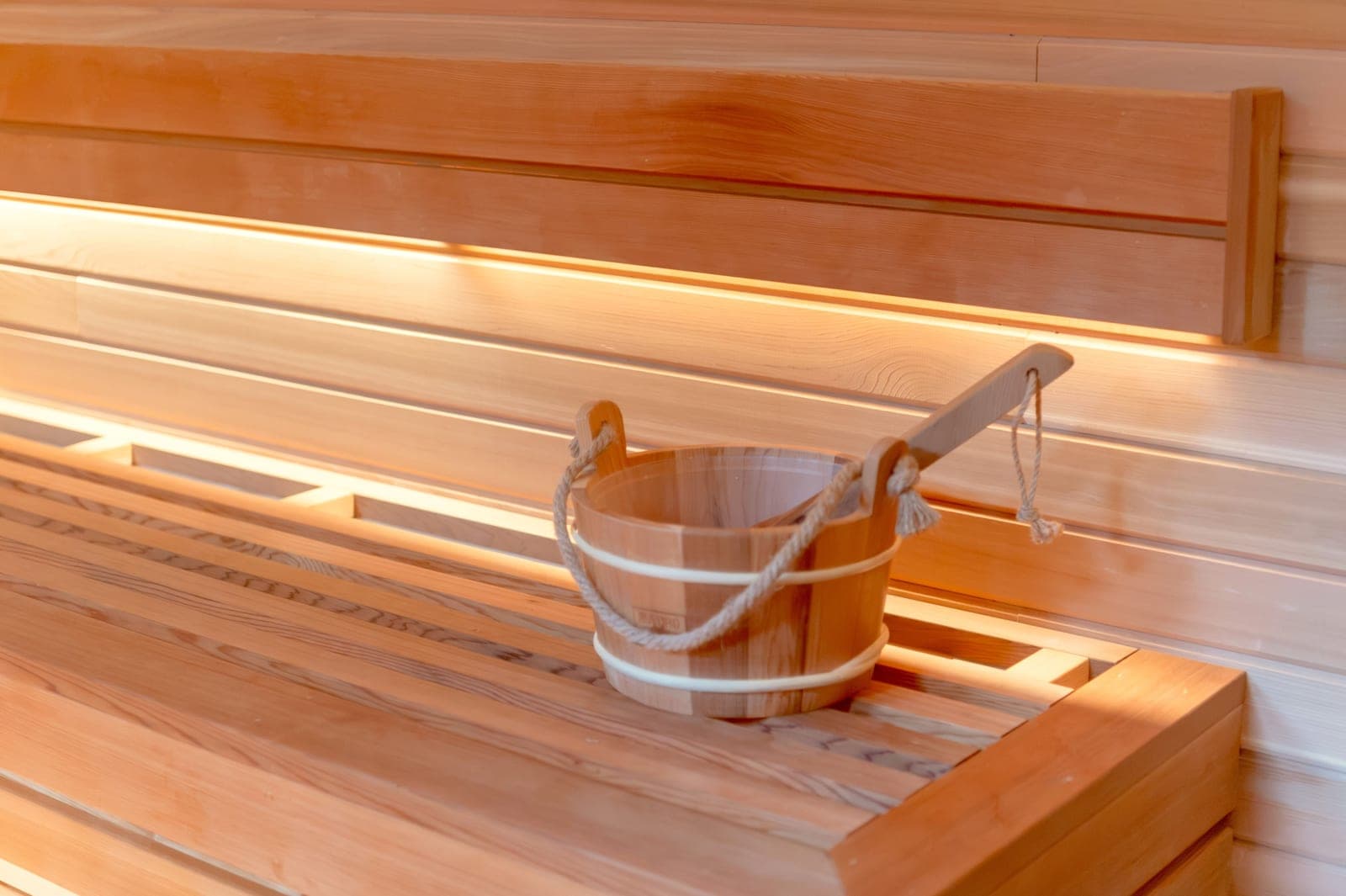
Most people should buy smaller than they first plan to. A 4-person sauna sounds more capable than a 2-person one, but capacity you rarely use is capacity you pay for twice — once upfront and again every session you heat empty bench. The right size is the one that matches your normal evening, not your busiest imaginable one. Here is what actually changes when you size up, so you can decide with numbers instead of ambition.
Power: the biggest reason not to oversize
Size drives the heater, and the heater drives the electrical. A 2-person cabin often runs on a smaller heater — an infrared 2-person plugs into a standard 120V outlet, and a traditional 2-person uses a modest 3.5-4.5kW stove. A 4-person room needs a bigger heater (6kW and up) on a heavier 240V circuit, which means more demand on your panel and, for a traditional sauna, a more serious electrical job (Harvia publishes the room-size-to-kW guidance). The rough rule is about 1kW per 45 cubic feet of well-insulated room — our heater size guide does the math. The jump from 2 to 4 people is not linear in hassle: it can be the difference between plugging in and hiring an electrician.
Cost: upfront, running and install
A bigger sauna costs more three times over. The cabin itself is pricier; the bigger heater draws more power, so every session costs a little more to run (we cost this out on the running-cost page using EIA rates); and the heavier circuit makes the install more expensive. Running cost is modest either way, but the pattern is clear — a 4-person sauna is a bigger commitment on every line, and you should only take it on if you will genuinely fill the extra seats.
Footprint and heat-up time
A 2-person cabin drops into a spare-room corner, a basement or a garage bay. A 4-person room needs real floor space and the clearances to match, which narrows where it can go and may rule out indoor placement entirely. Bigger rooms also take longer to reach temperature — more air and more wood to heat — so a 4-person sauna is a slower warm-up before every session unless you oversize the heater to compensate (which costs more to run). A 2-person cabin is simply quicker and easier to live with day to day, which for most people means it gets used more.
When 4-person is the right call
Sizing up is not always wrong — it is wrong when it is aspirational. Buy a 4-person sauna if you genuinely, regularly sauna with three or four people (a family that bathes together, a household that entertains around it), or if two of you want to actually lie down and stretch out rather than sit upright. Those are real reasons, and for them the extra capacity earns its cost. Buying four seats for the occasional guest who visits twice a year is the trap — you will heat two empty seats hundreds of times to serve them.
The honest default: size to your normal, not your maximum
For the overwhelming majority of buyers, a 2-person sauna is the right answer: it fits more spaces, costs less to buy, run and install, warms up faster, and covers the solo-or-couple sessions that make up almost all home sauna use. Put the money you save toward better wood, a nicer heater, or the accessories that actually improve a session — see the accessories checklist. If you are shopping specific cabins, our 2-person infrared and 2-person indoor roundups are sized for exactly this buyer; for a genuine group, the 4-person barrels are the larger option. Size honestly and you will be happier with the sauna and its bills.
Questions
Frequently asked
Should I buy a 2-person or 4-person sauna?
Does a bigger sauna cost more to run?
Does a 4-person sauna need a 240V circuit?
Is it bad to buy a sauna bigger than I need?
Keep reading
Related
More in Sauna Guides
Receipts
Sources
- Harvia — electric sauna heater specifications and room-size guidance (manufacturer)
- U.S. EIA — average retail price of electricity (residential)
We do not run a testing lab, and we do not pretend to. Product specs are transcribed from the manufacturer's own listing and cited as claims; health figures come from peer-reviewed studies, named and linked. Where we could not verify something, we say so on the page rather than quietly leaving it out. Read our full method.